

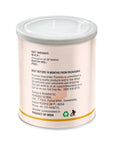
Behentrimonium Chloride (BTAC)
| What is it? |
Behentrimonium Chloride is a cationic emulsifier and conditioning ingredient. Unlike Behentrimonium Methosulfate (BTMS) it is often available without any stabilizing additives like cetearyl alcohol, so you’ll need to add some of your own in order to create stable emulsions with it. It is most commonly used as a hair care ingredient for reducing static and frizzing in hair conditioning products. Behentrimonium chloride is also an emulsifying agent, which helps to improve the moisture content of the hair. Active content: 80%. |
| INCI | Behentrimonium Chloride |
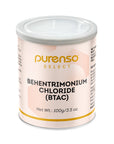
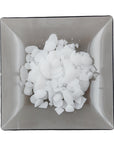
| Appearance | White flakes |
| Applications | Hair conditioners, hair color, hair shampoos, hair rinses, mousse, and also in detergents |
| Usage rate | 0.2–7%. (according to the formulation, as excessive use may make hair feel greasy). |
| Texture | Products made with behentrimonium chloride tend to have a smooth, powdery finish. |
| Scent | Strong odor |
| Approximate Melting Point | 90°C (194°F) |
| pH | 6–8 |
| Charge | Cationic |
| Solubility | Oil |
| Why do we use it in formulations? | Behentrimonium Chloride is an excellent conditioner, helping improve comb-through, reduce static, and soften coarse hair. It is most typically used in cream-type hair conditioners, both leave-in and rinse-out. |
| Refined or unrefined? | Behentrimonium Chloride only exists as a refined product. |
| Strengths | Behentrimonium Chloride is an excellent conditioning active in hair products. |
| Alternatives & Substitutions | BTMS-50 is a good alternative. |
| How to Work with It | Melt it in your oil phase; We find it typically needs some form of direct heat (microwave or stovetop) to melt through. Be careful not to burn it! Running it through your DIY-only coffee grinder to powder it will help it melt. |
| Tips, Tricks, and Quirks | Behentrimonium Chloride is made from canola oil and is Whole Foods Premium Body Care approved. |
| Benefits |
|


This product is a cosmetic raw material and is intended for external use only in cosmetic and personal care formulations. It is not intended for internal consumption or medicinal use.
- Do not ingest.
- Keep out of reach of children.
- Avoid direct contact with eyes.
All product images are for illustrative purposes only. Actual product color, texture, or packaging may vary from batch to batch.
Information provided on this website is for educational purposes only and should not be considered or interpreted as medical advice.
While we do not offer products for internal use, we source only high-quality, pharmaceutical or food-grade ingredients. Ingredient purity and performance are critical in cosmetic applications, just as they are in ingestible products.
Please note:
Just because two products have the same name or CAS number does not guarantee the same grade, purity, or effectiveness. Always choose trusted suppliers. Choose Purenso for premium-grade ingredients you can rely on.
FREQUENTLY ASKED QUESTIONS