
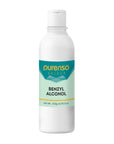
Benzyl Alcohol
Benzyl Alcohol
Benzyl Alcohol
Benzyl Alcohol
Benzyl Alcohol
Benzyl Alcohol
Benzyl Alcohol
Benzyl Alcohol
Benzyl Alcohol
Benzyl Alcohol
Benzyl Alcohol
Benzyl Alcohol

Benzyl Alcohol

Size 100g
Adding to Cart Added to Cart

Cosmetic Preservative Component, Solvent & Fragrance Ingredient

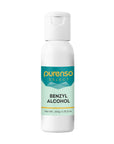
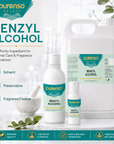
Purenso Select’s Benzyl Alcohol is a versatile cosmetic raw material used in skincare, haircare, cleansing, soap, and fragrance formulations. It is an aromatic alcohol valued by formulators for its multifunctional performance as a preservative component, solvent, fragrance ingredient, and viscosity-modifying ingredient.

In personal care formulations, Benzyl Alcohol helps support product preservation when used as part of a properly designed preservative system. It is also useful as a solvent for selected fragrance materials, aroma chemicals, and cosmetic ingredients, helping improve ingredient dispersion and formulation clarity in suitable systems.

Solubility: Slightly soluble in water; better compatibility with suitable solvents and cosmetic systems

Benefits:
  • Multifunctional cosmetic ingredient: works as a preservative component, solvent, fragrance ingredient, and viscosity-control aid.
  • Supports preservation in water-based and emulsified cosmetic systems when used correctly.
  • Helps dissolve and carry fragrance materials, making it useful in perfume and scented personal care products.
  • Clear, low-viscosity liquid that is easy to incorporate with proper mixing.
  • Suitable for leave-on and rinse-off cosmetics when used within applicable regulatory and formulation limits.
  • Useful in paraben-free preservative strategies, especially when combined with suitable preservative boosters or co-preservatives.

Use: lotions, creams, serums, shampoos, conditioners, face washes, body washes, liquid cleansers, perfume blends, and other water-based or emulsified cosmetic products.

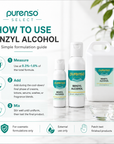
Application: Recommended use level 0.3–1.0% of the total formulation when used as a preservative component.

How to Add: Add during the cool-down phase, preferably below 40–45°C, and mix thoroughly until uniform. Benzyl Alcohol is only slightly soluble in water, so in high-water formulations it should be incorporated with proper mixing and, where needed, with compatible co-solvents or a complete preservative system. Benzyl Alcohol as slightly soluble in water and lists it as a preservative, solvent, perfuming, antimicrobial, and viscosity-controlling ingredient.

INCI: Benzyl Alcohol

PhenoxyethanolPhenoxyethanolPhenoxyethanolPhenoxyethanol

This product is a cosmetic raw material and is intended for external use only in cosmetic and personal care formulations. It is not intended for internal consumption or medicinal use.

  • Do not ingest.
  • Keep out of reach of children.
  • Avoid direct contact with eyes.

All product images are for illustrative purposes only. Actual product color, texture, or packaging may vary from batch to batch.

Information provided on this website is for educational purposes only and should not be considered or interpreted as medical advice.

While we do not offer products for internal use, we source only high-quality, pharmaceutical or food-grade ingredients. Ingredient purity and performance are critical in cosmetic applications, just as they are in ingestible products.

Please note:
Just because two products have the same name or CAS number does not guarantee the same grade, purity, or effectiveness. Always choose trusted suppliers. Choose Purenso for premium-grade ingredients you can rely on.

FREQUENTLY ASKED QUESTIONS
No. They are distinct chemicals with different formulation roles and restrictions. A similar name does not make them substitutes in a perfume or preservative system. Check the exact ingredient identity before changing the recipe and reassess the complete formulation.

Do not treat it as a drop-in replacement for perfume ethanol. Its evaporation, odour, solvent behaviour and applicable use requirements differ. A carrier-level substitution needs a separately designed and assessed formula rather than copying an alcohol-perfume recipe.

Not as a guaranteed preservative swap. The antimicrobial system, co-preservatives and formula conditions must be reassessed. Compare the complete compositions and validate the reformulated product instead of assuming that two preservative ingredients provide identical protection at equal weights.

No. A complete blend may contain other antimicrobial components, solvents or boosters. Replacing the whole blend with Benzyl Alcohol removes those ingredients. Use the actual formula and supplier specifications rather than transferring a trade blend's recommended dose to the neat material.

Yes. Assess the total contribution from all relevant sources in the finished formula. A separately added preservative amount is not the whole picture when the same ingredient is present in a fragrance or premix. Use current composition information for the actual materials.

Yes. The companion acid or salt can impose important pH requirements on the system. Assess the combination at the finished product's actual pH rather than assuming that one component makes the whole blend effective under every condition.

The final mixture may no longer have the same solvent capacity as the premix. Check when the haze appears and compare small, measured trials of the complete carrier system. More stirring or an initially clear concentrate does not establish lasting compatibility.

It can contribute an intrinsic odour, so compare the finished formula with an appropriate control. A material used for preservation is not necessarily odourless. Evaluate the desired sensory result without hiding an unexplained odour change with extra fragrance.

It can change how the preservative is distributed within the emulsion and how the complete system behaves. Reassess preservation after a meaningful formula change. Keeping the same nominal preservative percentage does not by itself prove equivalent protection.

Not on that assumption. Adding it changes the composition and does not reset the product's age or establish a new expiry date. A revised formula needs suitable stability and preservation evidence rather than an extra preservative addition to an existing batch.

Do not attempt to make a contaminated or suspect cosmetic saleable by adding preservative. Isolate the batch, investigate hygiene and formulation causes, and follow an appropriate quality decision. A normal smell after treatment would not prove the product is safe.

No. Aromatic describes a chemical structural feature here, not proof of natural extraction or a complete fragrance blend. Establish origin and any natural-positioning claim from the exact supplier documentation rather than from the word aromatic.

Do not rely on the stated addition purpose alone. Review the complete composition, actual functions and the claim requirements for the intended market. Using a multifunctional ingredient as a solvent does not automatically make a preservative-free claim accurate.

No automatic transfer is justified. A prepared stock has its own concentration, container, contamination exposure and stability. Establish a suitable stock procedure and use period instead of assuming that the unopened raw-material expiry validates an in-house solution.

Do not substitute a cosmetic raw material for a validated cleaning and sanitising procedure. Concentration, contact time and the actual contamination challenge matter. Keep equipment hygiene separate from the preservative system used inside the finished cosmetic.