

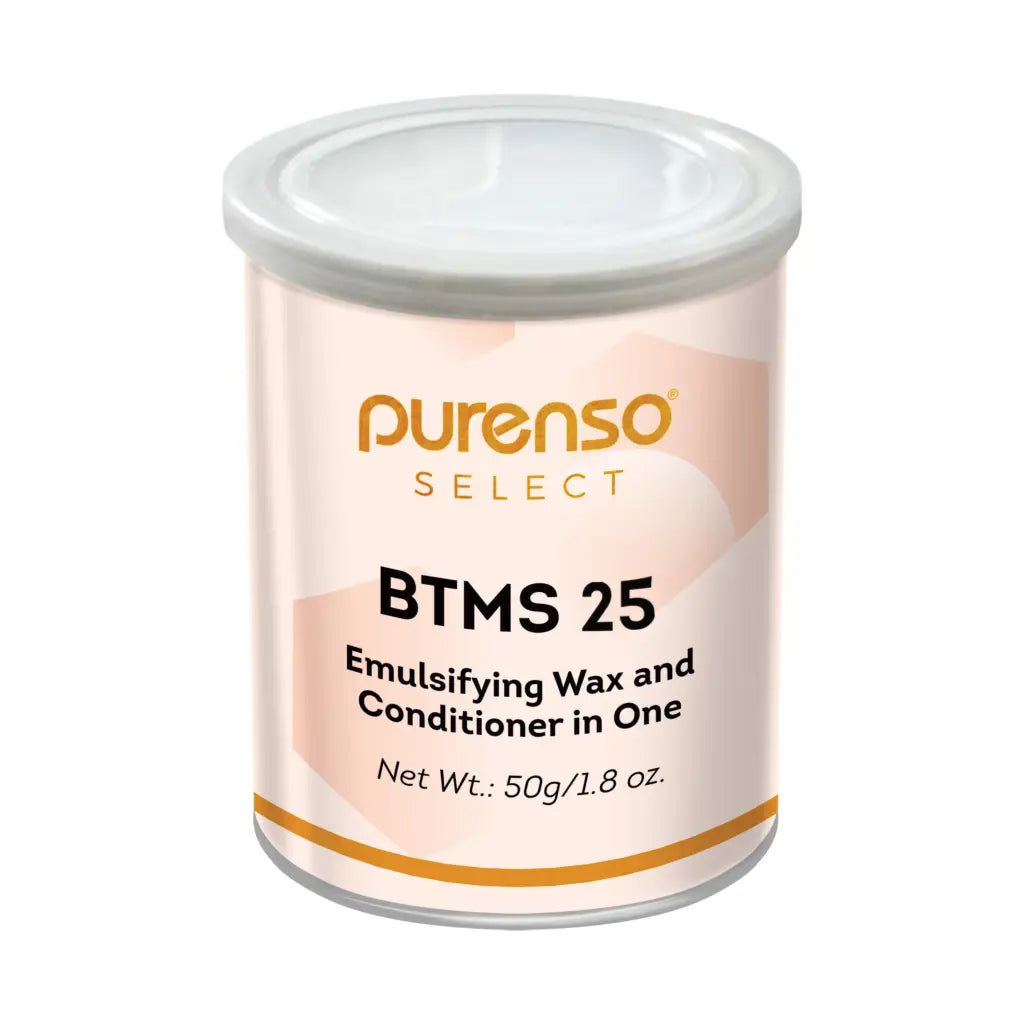
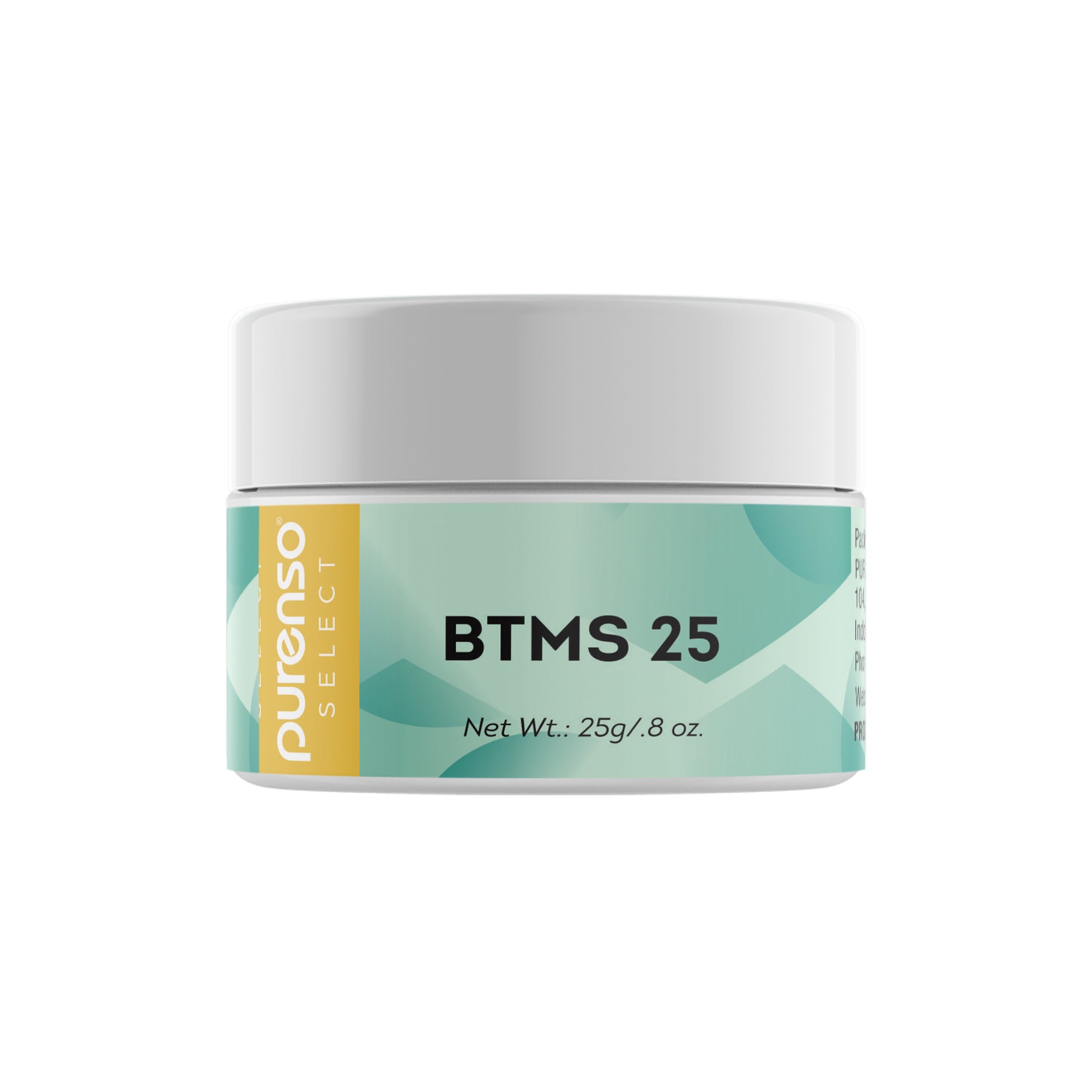
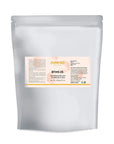
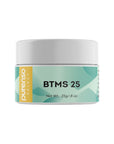
BTMS 25 (Behentrimonium Methosulfate & Cetearyl Alcohol)
| Description |
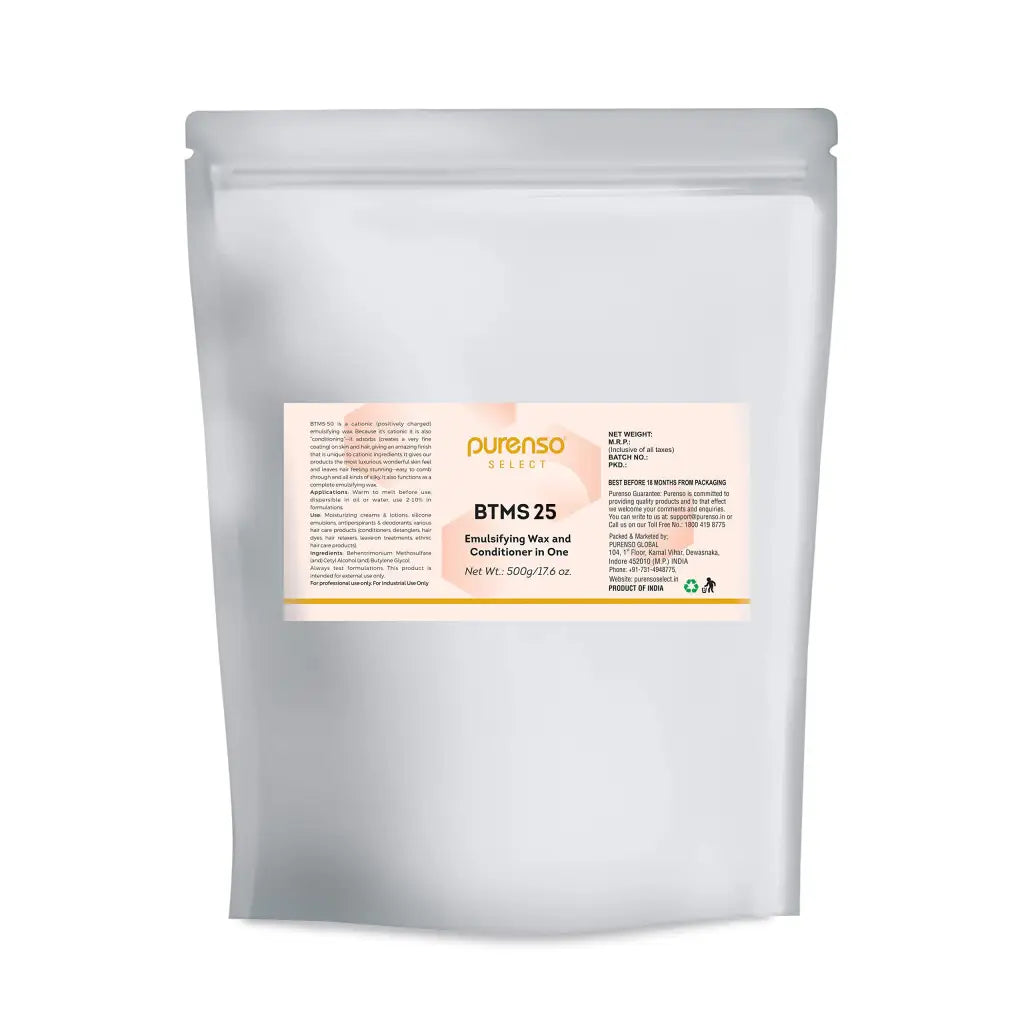
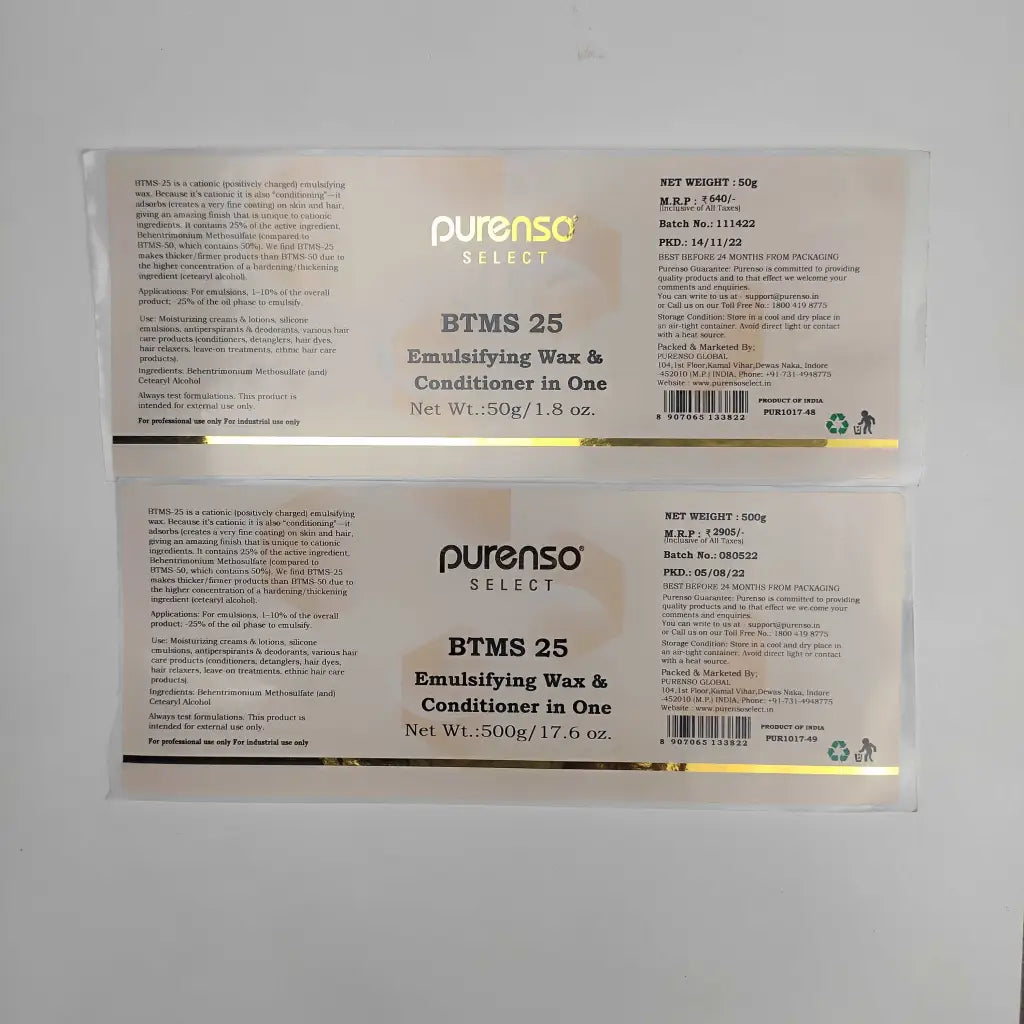
BTMS-25 is a cationic (positively charged) emulsifying wax. Because it’s cationic it is also “conditioning”—it adsorbs (creates a very fine coating) on skin and hair, giving an amazing finish that is unique to cationic ingredients. It contains 25% of the active ingredient, Behentrimonium Methosulfate (compared to BTMS-50, which contains 50%). We find BTMS-25 makes thicker/firmer products than BTMS-50 due to the higher concentration of a hardening/thickening ingredient (cetearyl alcohol). |
| INCI |
Behentrimonium Methosulfate (and) Cetearyl Alcohol |
| Appearance |
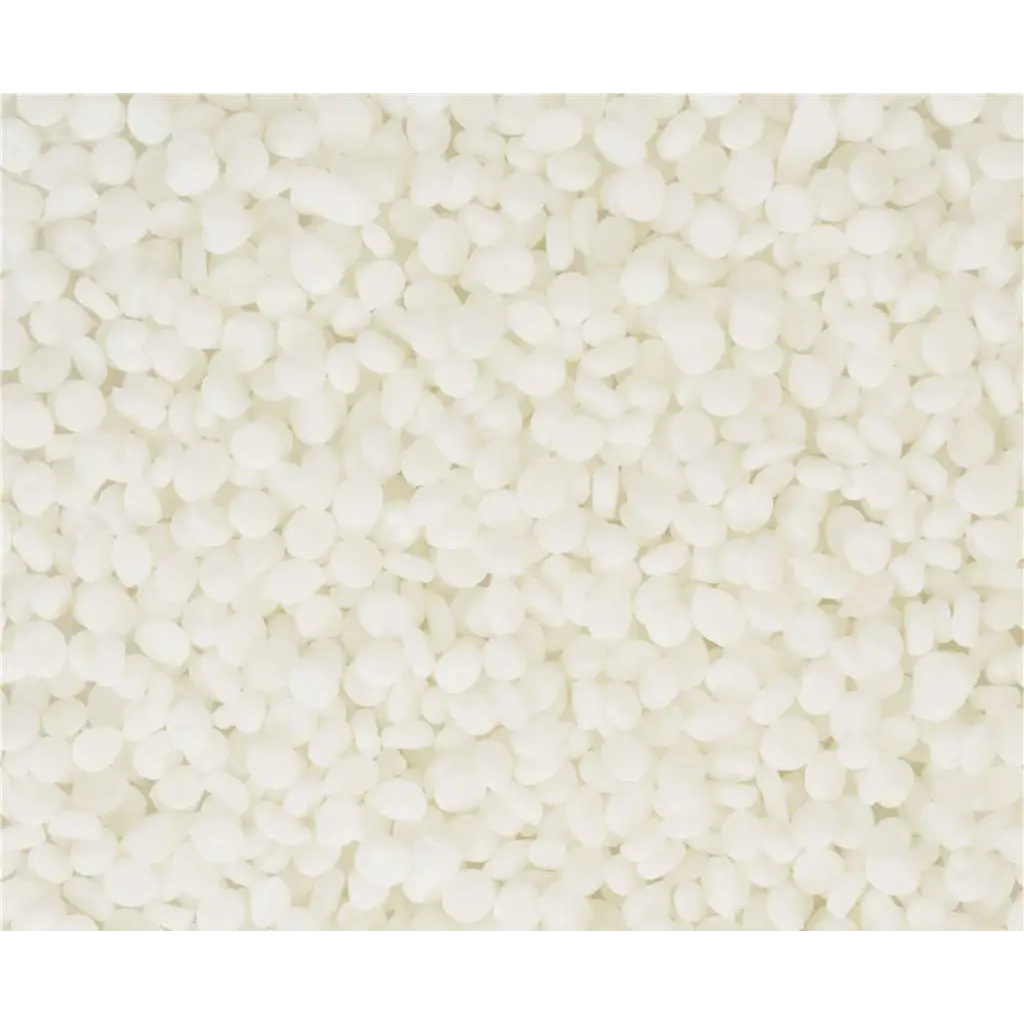
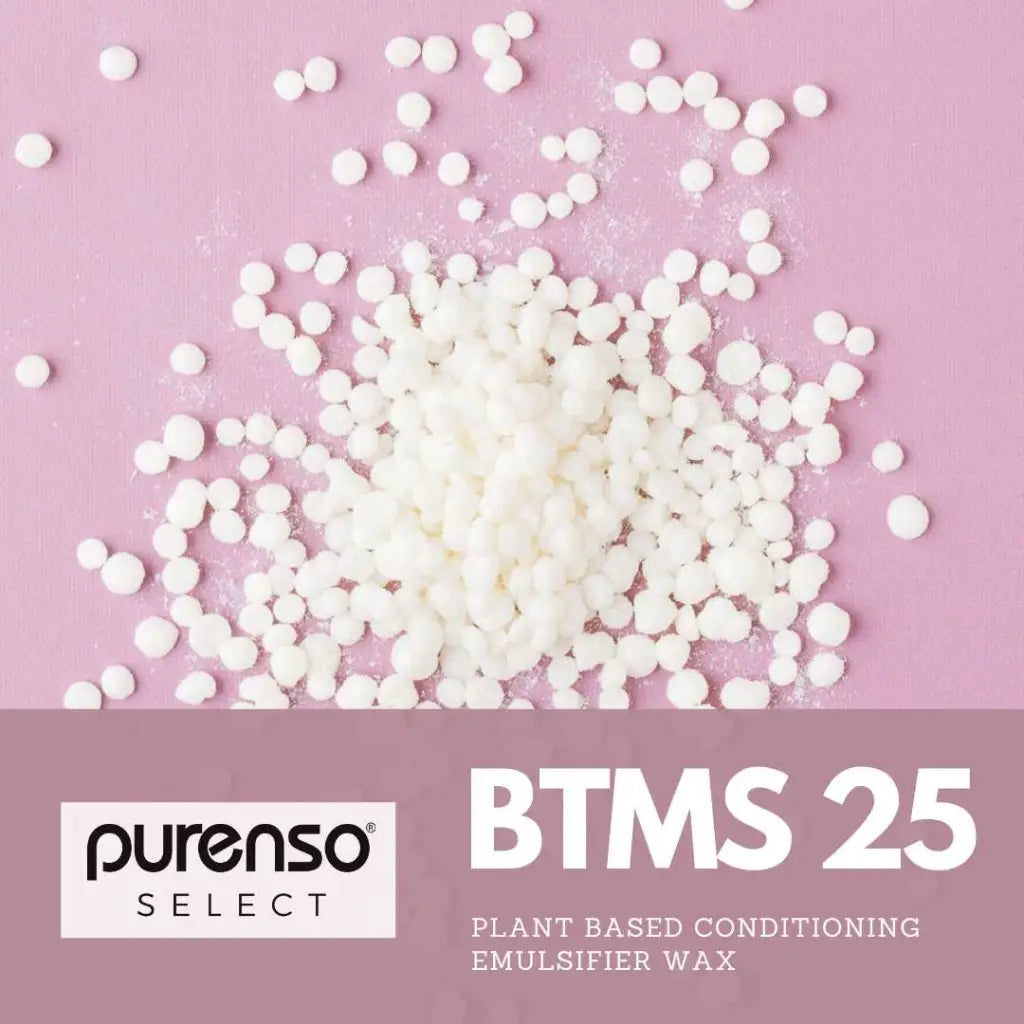
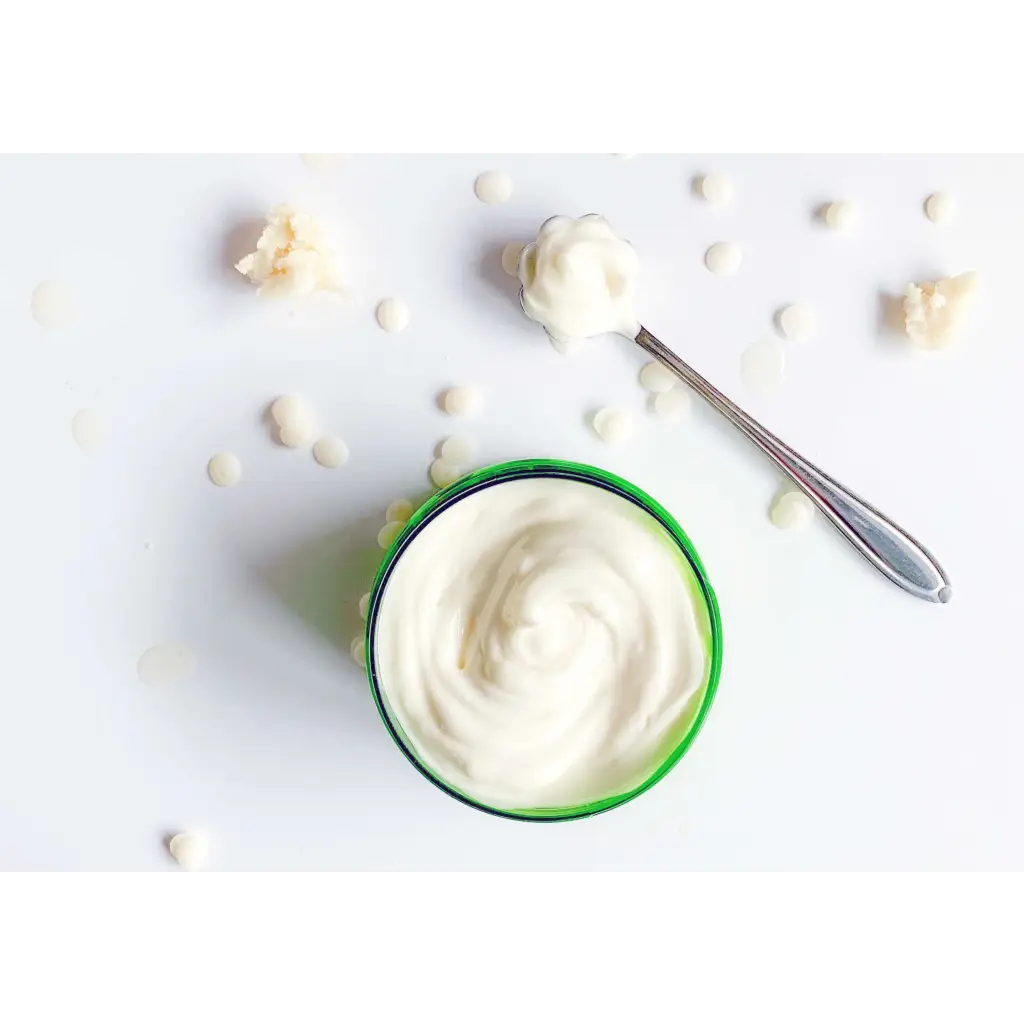
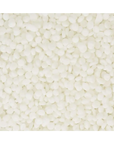
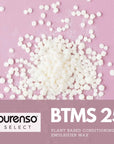
Small white waxy beads |
| Usage rate |
For emulsions, 1–10% of the overall product; -25% of the oil phase to emulsify. (We suggest 3% to 5% with 3% oils for a light lotion. 6% to 10% with up to 20% oils will give a thicker cream.) Using solid fats as part of the oil phase will also add extra thickness. |
| Applications |
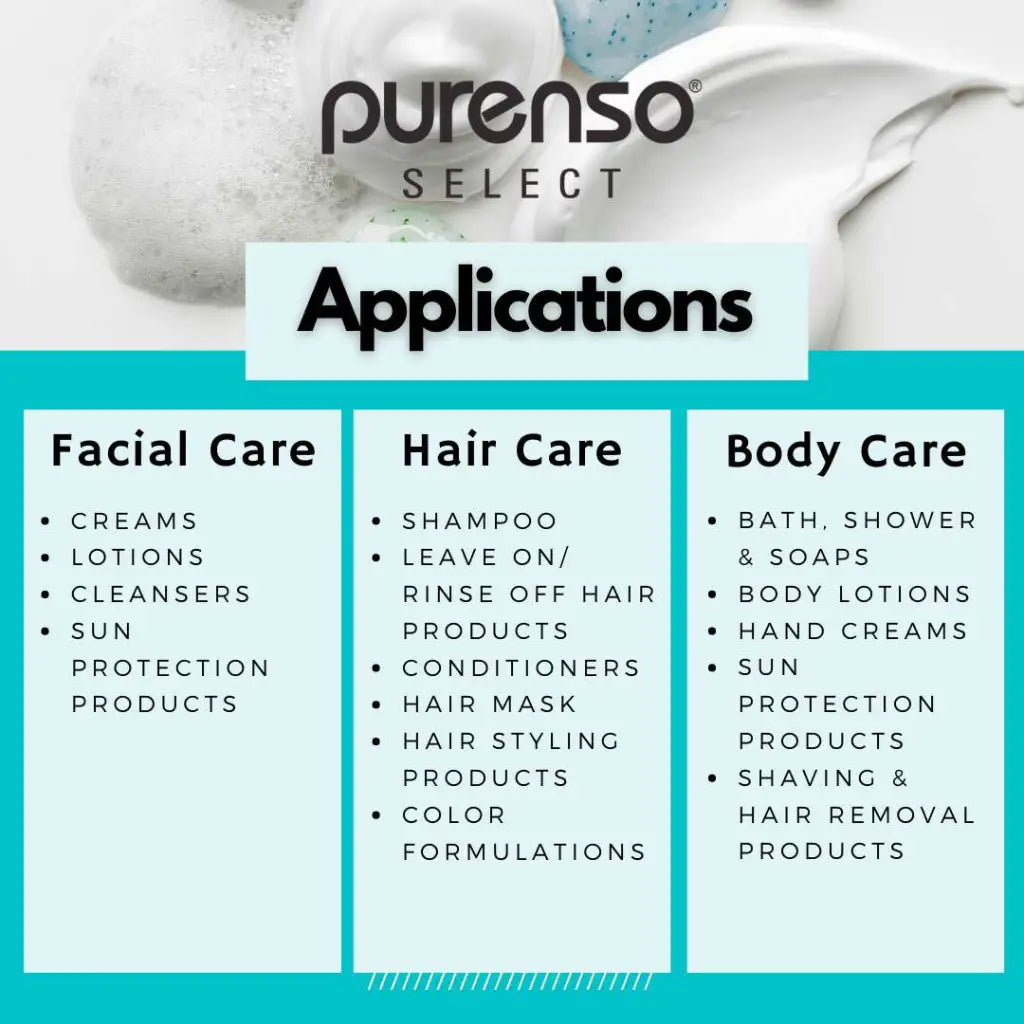
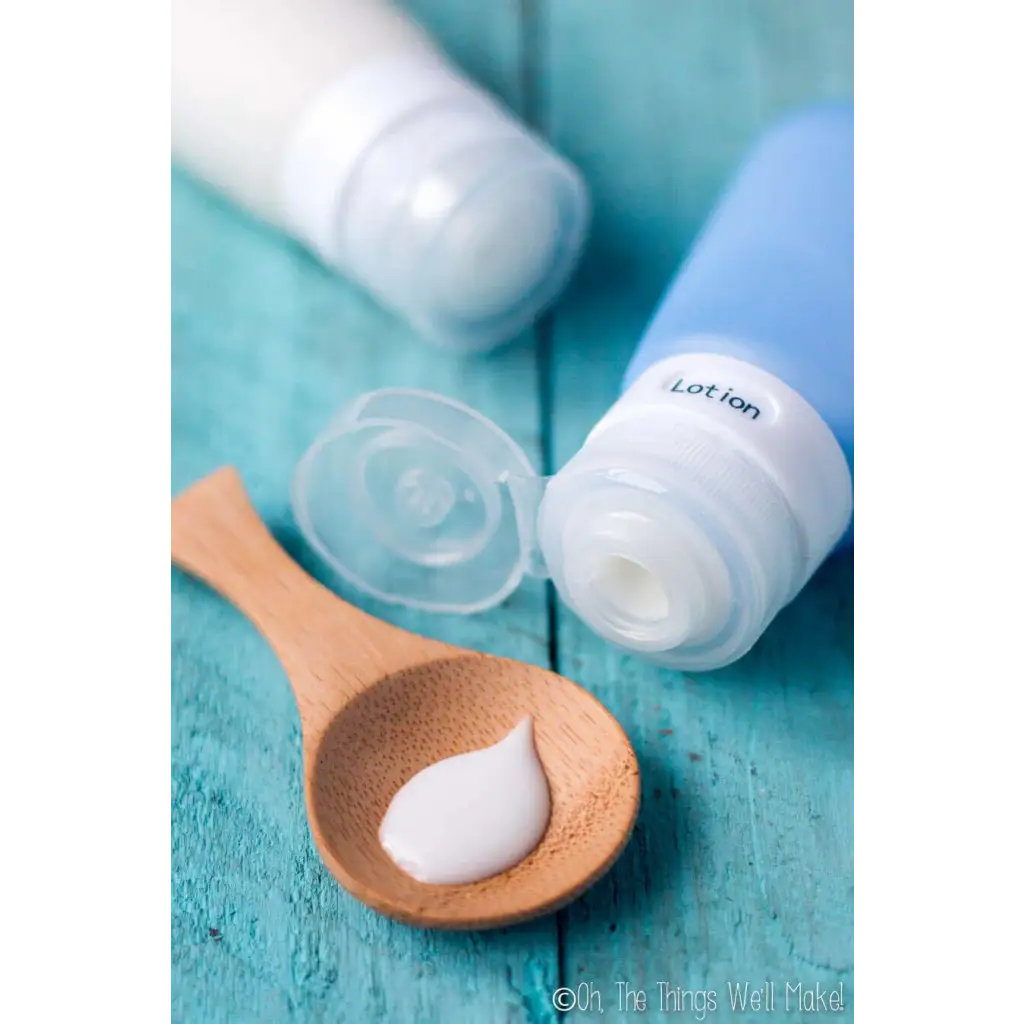
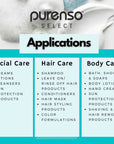
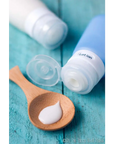
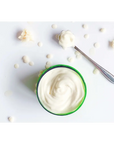
Lotions, emulsified scrubs, creams, hair conditioners, detanglers, deep conditioning relaxers, and many other popular personal care products. |
| Approximate Melting Point |
60°C (140°F) |
| pH |
5–7 (2% solution) |
| Charge |
Cationic (positive) |
| Scent |
Can be a bit fishy, but this usually doesn’t come through in finished products if used below 10–15%. |
| Solubility |
Oil |
| Why do we use it in formulations? |
It gives our products the most luxurious, wonderful skin feel and leaves hair feeling stunning—easy to comb through and all kinds of silky. It also functions as a complete emulsifying wax, emollient, and offers noticeable thickening. |
| Do you need it? |
If you want to make hair care products, definitely yes. It is also wonderful as the emulsifier in lotions and as a conditioning add-in for body butters and balms! |
| Strengths |
Great conditioning skin and hair feel. |
| Alternatives & Substitutions |
Non-cationic emulsifying waxes (Polawax, Emulsifying Wax NF, Olivem 1000 etc.) are not good alternatives for BTMS-25 as they are not going to bring that conditioning element to your formulation. They’ll emulsify the product, but that’s it. This is likely not going to ruin the product, but it will definitely negatively impact the performance. If it’s a hair conditioner you will definitely notice a decline in detangling and the silkiness of the hair. If it’s a conditioning body butter, there’s really no reason to use something Polawax in place of the BTMS-25; the BTMS-25 was included primarily for the conditioning element, not the emulsifying element, so using a non-cationic emulsifying wax in its place is somewhat useless. In an anhydrous application can probably try replacing BTMS with 50% cetyl or cetearyl alcohol and 50% soft or liquid oil (more of whatever is in the recipe). That will likely require some tweaking for proper consistency, though. You would likely be better off looking for a body butter formula that doesn’t use BTMS-25 at all. You could try incorporating a different cationic ingredient like a polyquaternarium into your formulation to replace the conditioning part of the BTMS-25, and then using a non-cationic emulsifying wax. You will need to watch solubility and usage rates, though. |
| How to Work with It |
Melt in the heated oil phase. |
| Tips, Tricks, and Quirks |
BTMS-25 can be a bit stubborn about melting in a water bath, so you might need to give your heated oil phase a quick burst in the microwave to get it to melt fully. |
| Benefits: |
|


This product is a cosmetic raw material and is intended for external use only in cosmetic and personal care formulations. It is not intended for internal consumption or medicinal use.
- Do not ingest.
- Keep out of reach of children.
- Avoid direct contact with eyes.
All product images are for illustrative purposes only. Actual product color, texture, or packaging may vary from batch to batch.
Information provided on this website is for educational purposes only and should not be considered or interpreted as medical advice.
While we do not offer products for internal use, we source only high-quality, pharmaceutical or food-grade ingredients. Ingredient purity and performance are critical in cosmetic applications, just as they are in ingestible products.
Please note:
Just because two products have the same name or CAS number does not guarantee the same grade, purity, or effectiveness. Always choose trusted suppliers. Choose Purenso for premium-grade ingredients you can rely on.
FREQUENTLY ASKED QUESTIONS