
Sorbic Acid
Sorbic Acid
Sorbic Acid
Sorbic Acid
Sorbic Acid
Sorbic Acid
Sorbic Acid
Sorbic Acid

Sorbic Acid

Size 100g
Adding to Cart Added to Cart

Formulator-grade Sorbic Acid Powder for acidic skincare, haircare, lotion, gel, and toner formulations requiring yeast and mould preservative support.

Sorbic Acid is a formulator-grade cosmetic preservative ingredient used in acidic skincare, haircare, and personal care formulations. It helps support product preservation by inhibiting the growth of yeast and mould in water-containing formulations such as lotions, creams, gels, toners, serums, mists, sprays, and selected cleansers. Sorbic Acid performs best in low-pH systems, making it suitable for formulations where the final pH is maintained around 4.0–6.0.

Due to its low water solubility, Sorbic Acid should be properly dissolved or pre-dispersed before addition, commonly using a compatible solvent such as alcohol, propylene glycol, or warm water. It is generally used at low levels and is often combined with other approved preservatives for broader protection. For commercial cosmetic products, the final formulation should always be tested for preservative efficacy, microbial stability, pH compatibility, and overall product safety before sale.

Solubility: Slightly soluble in water; more soluble in alcohol and glycols. For water-based formulations, dissolve with gentle heating or pre-disperse in a suitable solvent before adding to the formula.

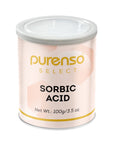
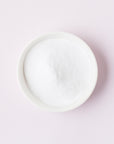
Appearance: White to off-white crystalline powder

Best suited pH: Works best in acidic formulas, ideally around pH 4.0 – 6.0.

Benefits:
  • Helps inhibit yeast and mould growth in water-based cosmetic formulas
  • Suitable for acidic formulations such as toners, gels, lotions, creams, and haircare products
  • Can be used as part of a broader preservative system
  • Useful for formulators who want pH-sensitive preservative support
  • Professional-grade ingredient for DIY and small-batch cosmetic manufacturing

Use: It is suitable for use in acidic cosmetic and personal care formulations such as lotions, creams, face toners, gels, serums, haircare products, body mists, sprays, and cleansers with a suitable pH. It is also useful for DIY skincare formulations and other water-based cosmetic products where preservative support against yeast and mould growth is required.

Application: 0.05–0.3% depending on formula and preservative system.

How to use: Pre-dissolve Sorbic Acid in a suitable solvent such as alcohol, propylene glycol, or warm water where compatible, then add it during the cool-down phase of the formulation. Mix well until fully incorporated.

INCI: Sorbic Acid

PhenoxyethanolPhenoxyethanolPhenoxyethanolPhenoxyethanol

This product is a cosmetic raw material and is intended for external use only in cosmetic and personal care formulations. It is not intended for internal consumption or medicinal use.

  • Do not ingest.
  • Keep out of reach of children.
  • Avoid direct contact with eyes.

All product images are for illustrative purposes only. Actual product color, texture, or packaging may vary from batch to batch.

Information provided on this website is for educational purposes only and should not be considered or interpreted as medical advice.

While we do not offer products for internal use, we source only high-quality, pharmaceutical or food-grade ingredients. Ingredient purity and performance are critical in cosmetic applications, just as they are in ingestible products.

Please note:
Just because two products have the same name or CAS number does not guarantee the same grade, purity, or effectiveness. Always choose trusted suppliers. Choose Purenso for premium-grade ingredients you can rely on.

FREQUENTLY ASKED QUESTIONS
Not automatically. They are different supplied forms with different molecular weights and dissolution behaviour. Formulate on the appropriate sorbic-acid-equivalent basis where relevant, then verify final pH and preservation. Equal weights should not be assumed to give an equivalent system.

Do not select it as an AHA substitute. In this context it is a preservative-system ingredient, not a peel active. An acidic name or low formula pH does not establish exfoliating performance or justify applying the raw material directly to skin.

The final mixture may hold less dissolved material when cool than when warm. Compare the finished solvent balance and observe stored trials. Do not approve a warm, temporarily clear batch without confirming that the preservative stays properly incorporated under intended storage conditions.

No. Removing precipitated material can change the amount remaining in the formula. Investigate and correct the formulation, then establish its actual suitability and preservation. A filtered product that looks clear is not automatically equivalent to the original weighed recipe.

Yes. Changing pH changes the balance between acid and sorbate forms, so improved visual dissolution does not necessarily mean better antimicrobial performance. Develop the final pH and solvent system together rather than using appearance alone as the success criterion.

Do not carry an acidic-cosmetic preservation strategy into an alkaline soap without specialist assessment. The soap's conditions may be unsuitable for the intended sorbic-acid activity. Select a strategy for the actual finished system rather than merely increasing the amount added.

Investigate the cause and reassess the preservative system at the changed conditions. A passing measurement on manufacture day does not cover an unstable pH throughout storage. Correct the formula and repeat the relevant stability and preservation work before release.

Use a defined and validated stock procedure rather than assuming the powder's shelf life transfers to a solution. Concentration, solvent, contamination control and stability all matter. Label preparation details and avoid repeatedly topping up an old stock with fresh solution.

Colour change is possible under some conditions, but the preservative should not be blamed without comparison. Keep an unscented or suitable control and investigate other ingredients, light exposure, packaging and microbiological quality. Do not disguise unexplained yellowing with colourant.

No. An initial microbial test checks the sampled product's condition at that point. A preservative efficacy or challenge test assesses how the finished system handles a defined microbial challenge over time. They answer different questions and should not be treated as interchangeable.

No. The supplied ingredient's preservative is diluted and placed in a different environment when the final product is made. Account for all contributions, but assess the complete formula rather than assuming that one preserved raw material protects everything else.

No. Packaging can reduce some exposure but does not make the bulk formula sterile or correct an unsuitable preservative system. Assess the final formula and its intended pack together, including manufacturing hygiene and realistic use conditions.

Not automatically. Commercial blends can contain additional acids, salts, water or other components, with their own specifications and validated guidance. Do not copy the commercial blend's dose or claims onto a homemade mixture; assess the actual composition and finished formula.