

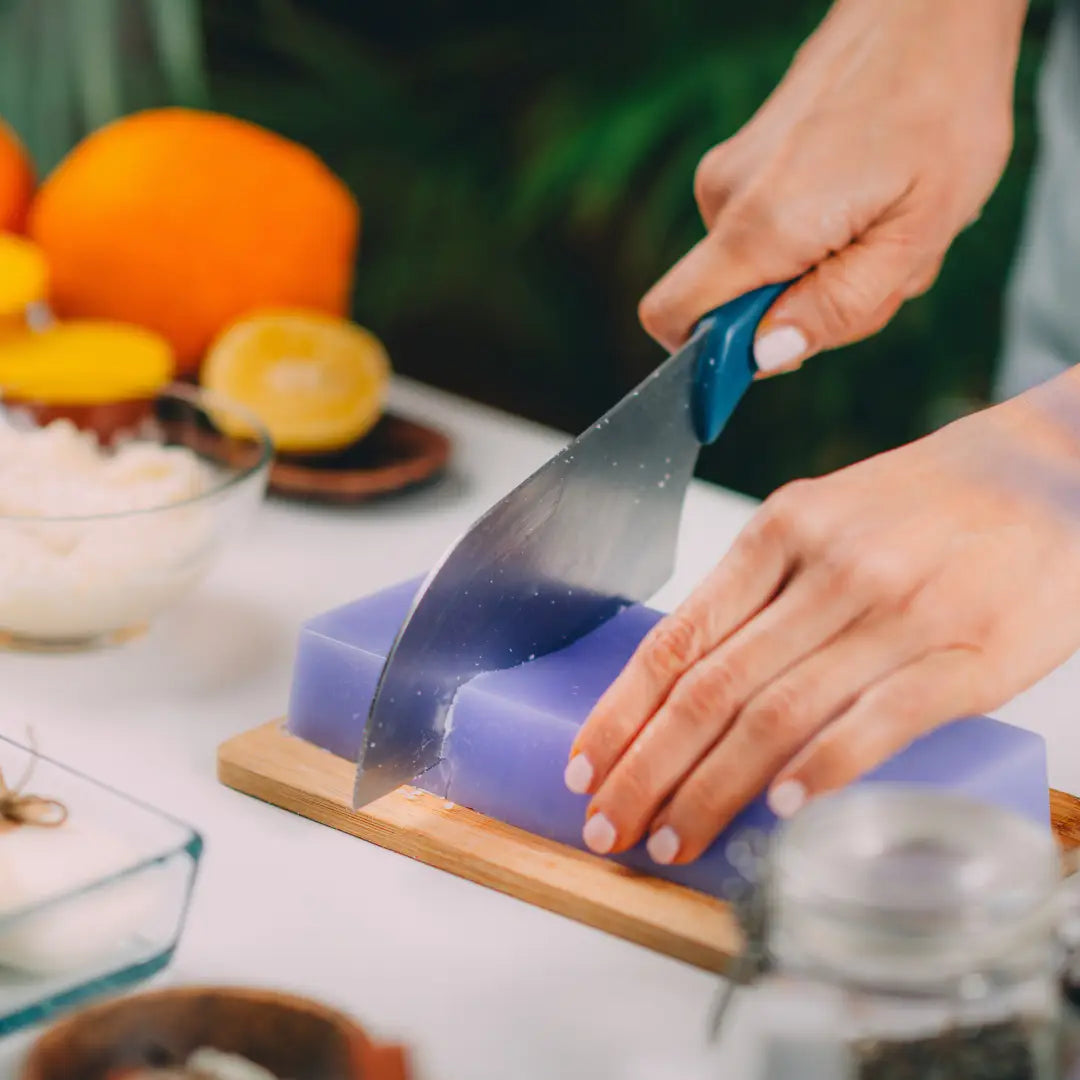
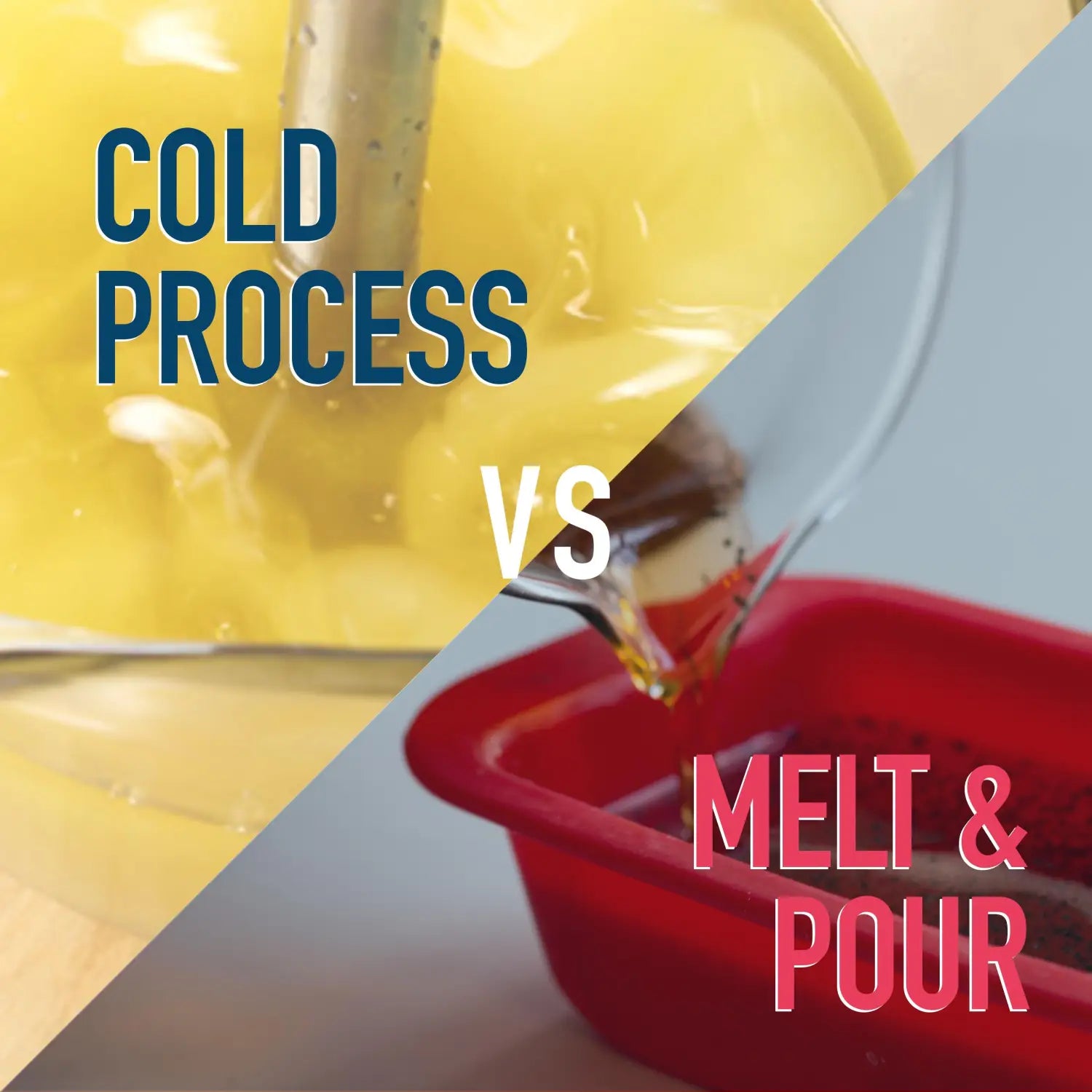
We’ve listed some of the pros and cons of Melt & Pour and Cold Process soap making below:

Final Thoughts
There is a lot of debate around Cold Process and Melt & Pour soap making. The truth is, they are both great ways to make soap! For those who enjoy measuring, weighing, and saponifying – we salute you! It’s no easy thing that’s for sure. However, we encourage you not to make the assumption that Melt & Pour is “nasty and full of chemicals.” We continue to innovate, and if you want to try Melt & Pour soap, but don’t think it’s ‘real’ soap, or that it’s not ‘natural’ - we can assure you it is!
Melt & Pour can be produced in many different ways, using natural ingredients, whilst also providing you with more flexibility, quicker production and an opportunity to scale your hobby into a brand and a business.
"Let’s be honest, curing takes some time; so always be sure to check your Cold Process soap, make sure it’s in the right range of pH, and that all of your lye has reacted, so that you can stay safe and have fun!"

